
Choosing a name for your son is one of the most meaningful decisions you’ll ever make — and if your family speaks more than one language, that decision carries even more weight. A bilingual boy name isn’t just a label; it’s a bridge between cultures, a nod to heritage, and a gift that travels with your child everywhere he goes. The best bilingual names feel natural in two languages, sound strong in both, and carry meaning that resonates across borders.
Whether you’re a multicultural family, an expat raising children abroad, or simply someone who loves names that feel globally aware and beautifully layered, this list of 199+ bilingual boy names has everything you need. From classic cross-cultural choices to rare and sophisticated picks, modern cool names to biblical and spiritual options — this is the most comprehensive bilingual baby name guide you’ll find in 2026.
Quick Checklist Before Choosing a Bilingual Boy Name
Before diving into the names, it helps to run any candidate through a short practical filter. A name that looks perfect on paper can create unexpected challenges in daily life — so ask these questions first.
Does it pass the bilingual name test?
| Checklist Item | Why It Matters |
| Easy to pronounce in both languages | Avoids a lifetime of mispronunciation |
| Spelled similarly (or intuitively) in both | Reduces confusion at school and on documents |
| Carries positive meaning in both languages | Prevents accidental negative connotations |
| Sounds distinct enough to stand out | Avoids blending in completely in one culture |
| Works as both a full name and nickname | Gives your son flexibility as he grows |
| Not a slang word or insult in either language | This one is worth double-checking seriously |
Running any shortlisted name through this checklist takes five minutes and saves years of awkwardness. Now — onto the names.
Classic Bilingual Boy Names
Classic bilingual names have stood the test of time precisely because they work everywhere. These are the names that feel at home on a passport, in a classroom, and at a family dinner table — in any country. They’re familiar without being generic, and meaningful without being overdone.
- Alexander — Greek/English origin; means “defender of the people”; works beautifully across English, Spanish (Alejandro), French (Alexandre), and Russian cultures
- Adrian — Latin origin; works in English, Spanish, French, and Polish; means “son of Adria” — timeless and effortlessly bilingual
- Lucas — Greek/Latin origin; means “light” or “bringer of light”; pronounced similarly across English, Spanish, Portuguese, and French
- Sebastian — Greek/Latin origin; strong, classical, and immediately recognizable in English, Spanish (Sebastián), German, and French
- Daniel — Hebrew origin; means “God is my judge”; one of the most universally recognized names across virtually every language and culture
- Marco — Latin/Italian origin; familiar in Italian, Spanish, Portuguese, English, and beyond; feels modern and classic at once
- Julian — Latin origin; means “youthful”; works across English, Spanish (Julián), French (Julien), and German (Julian)
- Nicolas — Greek origin; a timeless name working across English, French (Nicolas), Spanish (Nicolás), and German
- Victor — Latin origin; means “conqueror” or “winner”; used across English, French, Spanish, and Portuguese with minimal variation
- Samuel — Hebrew origin; means “God has heard”; universally recognized and used across dozens of languages with almost no pronunciation shift
- Michael — Hebrew origin; means “who is like God?”; one of the most universally used names on the planet — works in every major language
- Rafael — Hebrew/Spanish origin; means “God has healed”; works beautifully in Spanish, Portuguese, Italian, and English (Raphael)
- Thomas — Aramaic origin; means “twin”; recognized and used across English, French, German, Spanish, and many other languages
- Liam — Irish/English origin; short form of William; increasingly global and recognized across cultures as a strong, simple bilingual choice
- Nathan — Hebrew origin; means “He gave”; clean, short, and recognized across English, French, and many European languages
Unique Bilingual Boy Names
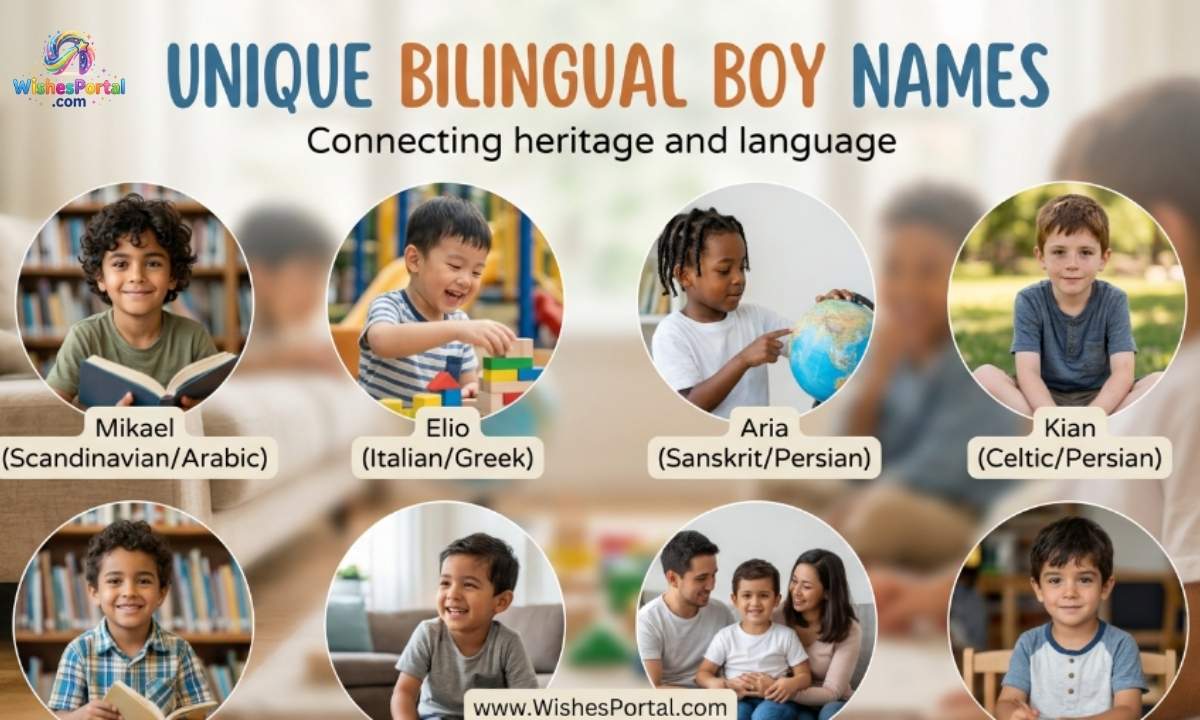
Sometimes you want a name that’s bilingual without being instantly predictable. These unique bilingual boy names sit in the sweet spot — recognizable enough to work across cultures, distinctive enough to turn heads.
- Caius — Latin/English; means “rejoice”; ancient and elegant, works in English and Italian
- Emilio — Spanish/Italian; means “rival”; globally known and naturally bilingual across Romance languages
- Leandro — Spanish/Portuguese/Italian; means “lion man”; strong and lyrical in equal measure
- Orion — Greek/English; the constellation name that sounds stunning in any language
- Remy — French/English; means “oarsman” or “from Rheims”; used across genders and cultures
- Soren — Danish/English; means “stern” or “severe”; minimal and sophisticated with a Scandinavian edge
- Caspian — English/Persian; named after the Caspian Sea; literary, rare, and undeniably memorable
- Matteo — Italian/Spanish; Italian form of Matthew; increasingly popular globally and distinctly bilingual
- Nico — Greek/Italian/Spanish; short for Nicholas or Nicolás; works perfectly as both a standalone name and a nickname
- Theo — Greek/English/French; short for Theodore or Théodore; simple, strong, and effortlessly cross-cultural
- Zeno — Greek/Italian; means “gift of Zeus”; ancient, short, and strikingly unusual
- Idris — Welsh/Arabic; means “ardent lord” in Welsh and is a name of a prophet in Arabic; powerful cross-cultural resonance
- Fionn — Irish/English; means “fair” or “white”; soft-sounding but deeply rooted in Celtic mythology
- Tarquin — Latin/English; ancient Roman name with unusual elegance rarely heard today
- Calix — Greek/Latin; means “chalice” or “cup”; short, stylish, and genuinely rare
Modern & Trendy Bilingual Boy Names
Modern bilingual boy names reflect the way the world actually talks today — global, fluid, and culturally aware. These trending names are appearing on birth registries across continents right now, and for good reason. They feel fresh without being novelty picks.
- Mateo — Spanish/English; the Spanish form of Matthew; currently one of the most popular bilingual boy names globally
- Ezra — Hebrew/English; means “help”; short, clean, and trending strongly in both English and Hebrew-speaking communities
- Leo — Latin/English/Spanish; means “lion”; short, strong, and works identically across nearly every language
- Rafe — English/Spanish; a modern spelling variant of Rafael; sleek and current
- Axel — Scandinavian/English/German; means “father of peace”; popular across Northern Europe and increasingly in English-speaking countries
- Zaid — Arabic/English; means “growth” or “abundance”; increasingly used in multicultural Western families
- Kai — Hawaiian/Japanese/Welsh/Scandinavian; means “sea” in several languages; one of the most genuinely multilingual names in existence
- Luca — Italian/Romanian/English; currently trending globally; short, modern, and naturally bilingual
- Arlo — English/Spanish; means “barberry tree”; gaining rapid popularity and works cleanly in multiple languages
- Milo — Slavic/German/English; means “gracious” or “soldier”; modern and internationally beloved
- Jude — Hebrew/English/French; means “praised”; short, cool, and works across English, French, and German-speaking cultures
- Cruz — Spanish/English; means “cross”; strong, short, and stylish in both Spanish and English contexts
- Felix — Latin/English/German/Spanish; means “happy” or “fortunate”; timeless and trending at the same time
- Beau — French/English; means “handsome”; simple, warm, and increasingly global
- Ren — Japanese/Chinese/English; means “lotus” or “love”; minimal and internationally clean
Short & Simple Bilingual Boy Names
Sometimes the most powerful bilingual names are the shortest ones. Short bilingual boy names cross language barriers effortlessly because they have fewer syllables to mispronounce and fewer letters to misspell. These are the names that work everywhere — naturally.
- Max — Latin/German/English; means “greatest”; universally recognized and requires zero adjustment across languages
- Eli — Hebrew/English; means “my God” or “ascent”; short, strong, and seamlessly bilingual
- Ian — Scottish/English; the Scottish form of John; clean, simple, and works across European languages
- Ben — Hebrew/English; short for Benjamin; means “son of the right hand”; short, friendly, and universally familiar
- Ace — English/Latin; means “unity” or “one”; modern and punchy, increasingly used globally
- Rio — Spanish/Portuguese/Japanese; means “river”; geographic, vibrant, and naturally cross-cultural
- Taj — Arabic/Sanskrit; means “crown”; short, strong, and culturally rich
- Rex — Latin/English; means “king”; regal, short, and works without translation
- Rui — Portuguese/Japanese; means “famous ruler” in Portuguese; rare in English-speaking countries but globally elegant
- Jay — English/Sanskrit; means “victory” in Sanskrit; simple and universal
- Cem — Turkish/Arabic; pronounced “Jem”; means “one who gathers people”; short and striking
- Sai — Japanese/Sanskrit; clean, modern, and recognized across Asian language families
- Bas — Dutch/Spanish; short for Sebastian or Bastiaan; minimal and cool
- Gil — Hebrew/Spanish/Portuguese; means “joy”; short, joyful, and works quietly across several languages
- Zen — Japanese/English; evokes peace and mindfulness; short, modern, and completely cross-cultural
Strong & Powerful Bilingual Boy Names
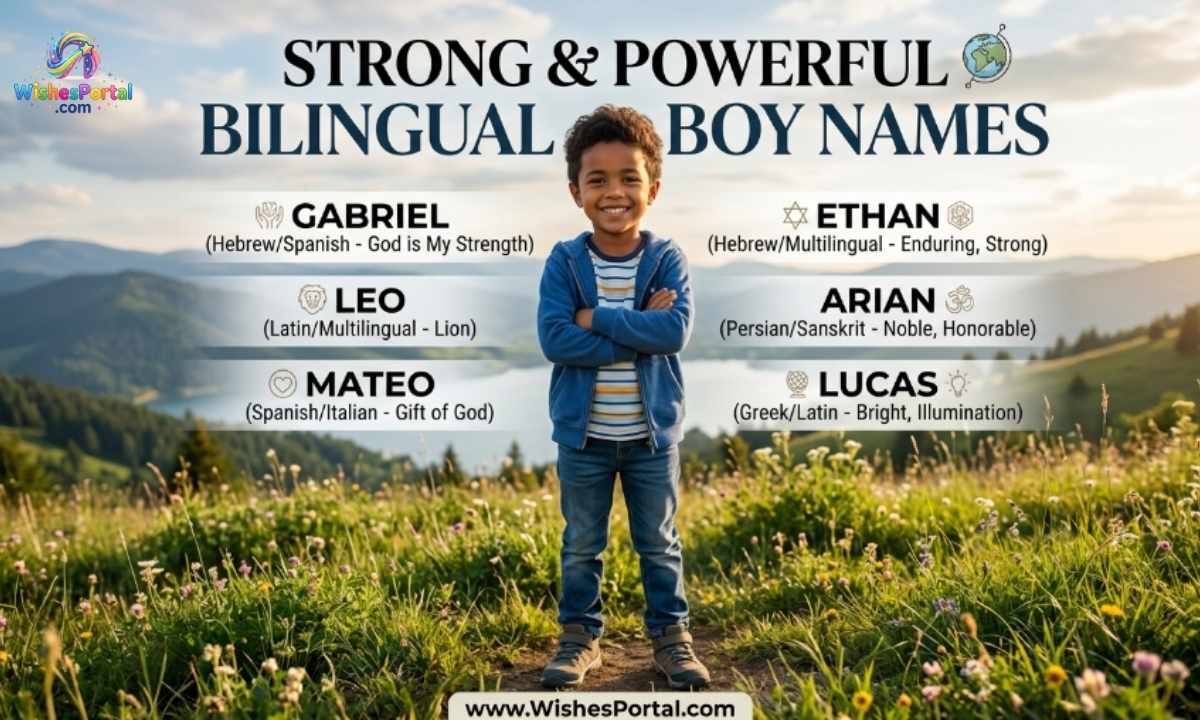
A strong bilingual name carries authority in any room, any country, any language. These powerful bilingual boy names have weight and presence — names that feel like they belong to someone who leads, builds, and endures.
- Maximus — Latin/English; means “the greatest”; ancient power with modern appeal
- Aurelius — Latin/English; means “golden”; Roman emperor energy with timeless cross-cultural resonance
- Leandro — Spanish/Portuguese/Italian; means “lion man”; strength embedded in sound and meaning
- Leonidas — Greek/English; means “son of a lion”; history-defining and powerfully bilingual
- Darius — Persian/English/French; means “he who holds firm to good”; ancient and commanding
- Magnus — Latin/Scandinavian; means “great”; short, strong, and works across Northern European languages
- Rodrigo — Spanish/Portuguese/Italian; means “famous ruler”; strong and richly rooted in Iberian culture
- Alaric — Gothic/English/German; means “ruler of all”; rare, powerful, and historically resonant
- Orlando — Spanish/Italian/English; means “famous land”; strong Romance language name with English crossover
- Brenin — Welsh; means “king”; rare outside Wales but deeply powerful for families with Welsh heritage
- Aldric — German/French; means “noble ruler”; uncommon but deeply strong
- Evander — Greek/English; means “good man”; mythological roots with modern wearability
- Conrad — German/English; means “brave counsel”; strong, classic, and works in both Germanic and English cultures
- Emeric — German/Hungarian/French; means “home ruler”; rare and powerful with Central European roots
- Theron — Greek/English; means “hunter”; clean, strong, and naturally cross-cultural
Nature-Inspired Bilingual Boy Names
Nature names are inherently cross-cultural because the natural world doesn’t belong to one language. These nature-inspired bilingual boy names draw from rivers, mountains, animals, and elements — making them universally understood and emotionally resonant.
- River — English/Spanish (Río); one of the most straightforward nature-to-bilingual translations available
- Orion — Greek/English; the great hunter constellation; recognized across cultures and science communities
- Forest — English/French (Forêt); earthy, grounded, and growing in popularity globally
- Rocco — Italian/English; means “rest” but associated with strength and rocky terrain; works across Italian and English
- Silas — Latin/English; means “wood” or “forest”; earthy and quietly beautiful across cultures
- Calder — Scottish/English; means “rough waters”; strong nature name with Celtic roots
- Cove — English; short, aquatic, and increasingly used as a modern nature name with cross-cultural appeal
- Zephyr — Greek/English/French; means “west wind”; poetic, airy, and universally understood
- Sage — English/Latin; means “wise” or the herb; works across English and French (Sauge) contexts
- Sol — Spanish/Latin; means “sun”; short, warm, and immediately cross-cultural in Romance languages
- Cedar — English/Hebrew; strong, earthy, and growing as a modern bilingual nature name
- Bryn — Welsh/English; means “hill”; clean, simple, and naturally bilingual between Celtic and English
- Fen — English/Dutch; means “marshland”; short, earthy, and quietly rare
- Ivo — German/French/English; means “yew wood”; nature-rooted and elegantly cross-cultural
- Aldo — Italian/German; means “old and wise” but carries strong elemental, earthy energy across Romance languages
Cultural & Heritage Bilingual Boy Names
Some families choose bilingual names specifically to honor dual heritage — to hold two cultures in a single name. These cultural bilingual boy names carry the weight of tradition while remaining accessible across both languages.
- Finn — Irish/English; means “fair” or “white”; deeply Celtic but widely recognized in English-speaking countries
- Hiro — Japanese/Spanish; means “generous” in Japanese; short enough to sit comfortably in Western contexts
- Kofi — Akan/English; means “born on Friday” in Akan (Ghana); internationally recognized through cultural icons
- Lior — Hebrew/English; means “my light”; beautiful, rare, and works across Hebrew and English communities
- Niall — Irish/Scottish/English; means “champion”; Celtic heritage name with strong cross-language wearability
- Ansel — German/English; means “God’s protection”; German heritage name with growing English appeal
- Cormac — Irish/English; means “son of defilement” historically, but used as a noble Celtic name; literary and deeply rooted
- Aryan — Sanskrit/Persian/English; means “noble” in Sanskrit; deeply rooted in South Asian heritage
- Emre — Turkish/Arabic; means “friend” or “brother”; popular in Turkish-speaking communities with cross-cultural warmth
- Dante — Italian/Latin/English; means “enduring”; immortalized in Italian literature and recognized worldwide
- Cian — Irish/English; means “ancient”; deeply Celtic with growing international use
- Leif — Old Norse/English; means “heir” or “descendant”; Scandinavian heritage name with clean English pronunciation
- Yusuf — Arabic/Hebrew/English; Arabic form of Joseph; deeply rooted in Islamic and Biblical tradition
- Tariq — Arabic/English; means “one who knocks at the door” or “morning star”; rich in Arabic heritage and widely recognized
- Callum — Scottish/English; means “dove”; Celtic heritage name that works beautifully in English-speaking contexts
Unique & Rare Bilingual Boy Names
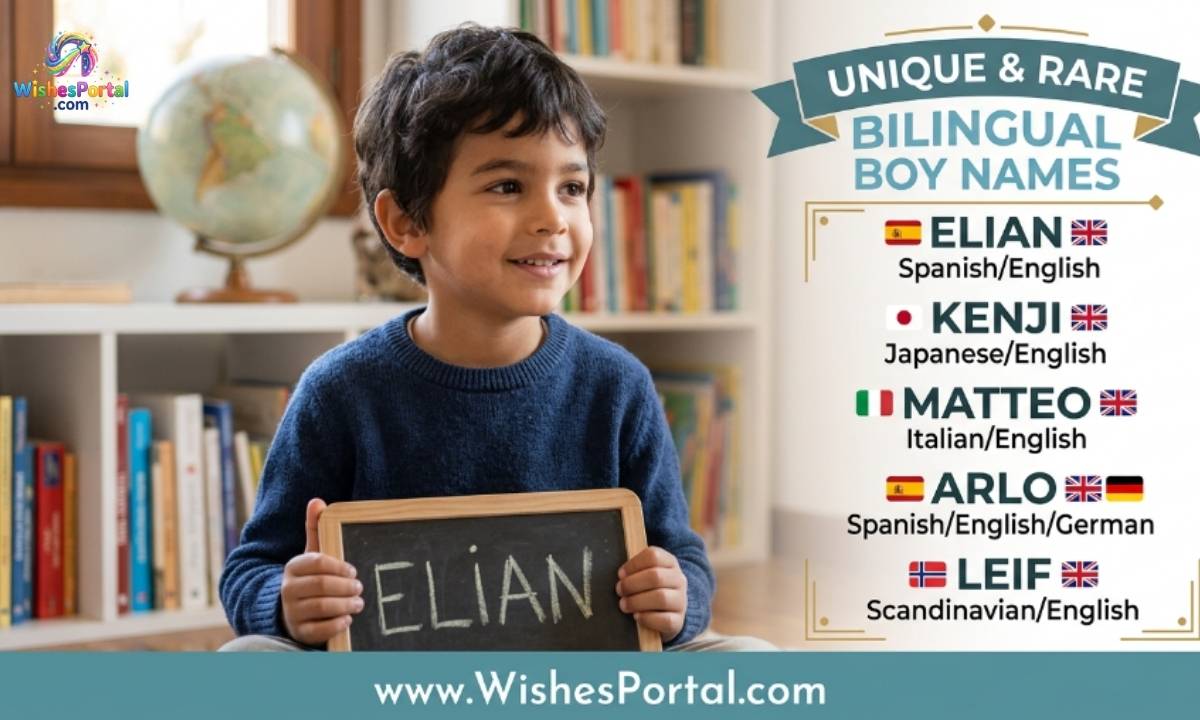
For families who want to go beyond the well-worn path, these rare bilingual boy names offer genuine originality without sacrificing cross-cultural usability. These are names you won’t find in every classroom.
- Cillian — Irish/English; means “war” or “strife” — but softened by a gorgeous sound; rarely used outside Ireland
- Peregrine — Latin/English; means “traveler” or “pilgrim”; rare, adventurous, and naturally bilingual
- Evren — Turkish/English; means “universe” or “cosmos”; rare outside Turkey but strikingly modern anywhere
- Bastian — German/Spanish/English; short for Sebastian; feels rare as a standalone despite its familiar roots
- Ossian — Irish/Scottish; means “little deer”; ancient Celtic name rarely heard outside literary circles
- Silvio — Italian/Spanish/Portuguese; means “from the forest”; uncommon but elegant across Romance languages
- Casimir — Polish/French/English; means “destroyer of peace” historically; used now as a noble, rare European name
- Emilian — Romanian/Latin; means “rival”; rare outside Eastern Europe but carries enormous elegance
- Thaddeus — Greek/Aramaic/English; means “heart” or “courageous heart”; rare and deeply resonant
- Ozias — Hebrew/Greek; means “strength of God”; biblical and rare in modern usage
- Vesper — Latin/English; means “evening star”; poetic, rare, and increasingly considered for boys
- Alric — German/English; means “noble ruler”; rare variant of Alaric with a cleaner modern feel
- Jovian — Latin/English; means “of Jupiter”; planetary, rare, and genuinely striking
- Leocadio — Spanish/Portuguese; means “bright, clear”; extremely rare in English but beautifully bilingual
- Quillan — Irish/English; means “cub”; rare, Celtic, and quietly charming
Biblical & Spiritual Bilingual Boy Names
Biblical names are among the most naturally bilingual names in existence — they’ve been translated, adapted, and adopted across dozens of languages for thousands of years. These biblical bilingual boy names carry spiritual depth alongside cross-cultural practicality.
- Elijah — Hebrew/English/Arabic (Ilyas); means “my God is Yahweh”; one of the great prophets, recognized across Abrahamic traditions
- Isaiah — Hebrew/English; means “salvation of the Lord”; poetic, strong, and increasingly popular globally
- Ezekiel — Hebrew/English; means “God strengthens”; powerful biblical name with growing modern use
- Gideon — Hebrew/English; means “mighty warrior”; strong, biblical, and naturally cross-cultural
- Solomon — Hebrew/English/Arabic (Suleiman); means “peace”; wisdom-associated and universally recognized across cultures
- Tobias — Hebrew/Greek/English/German; means “God is good”; works seamlessly across English, German, and Scandinavian cultures
- Micah — Hebrew/English; means “who is like God?”; clean, short, and beautifully bilingual
- Jonah — Hebrew/English; means “dove”; gentle, meaningful, and recognized across languages
- Matthias — Hebrew/Greek/German/English; the Greek form of Matthew; works across multiple European languages
- Silas — Latin/Greek/English; means “forest” or “wood”; appears in the New Testament and works across Western languages
- Amos — Hebrew/English; means “carried by God”; rare, strong, and deeply biblical
- Caleb — Hebrew/English; means “faithful” or “whole-hearted”; popular in both Hebrew and English communities
- Jethro — Hebrew/English; means “overflow” or “abundance”; biblical and surprisingly stylish in modern contexts
- Emmanuel — Hebrew/French/Spanish/English; means “God is with us”; Christmas-associated but deeply cross-cultural year-round
- Asher — Hebrew/English; means “happy” or “blessed”; short, modern-feeling, and firmly biblical
Literary & Artistic Bilingual Boy Names
Names drawn from literature and art carry an instant sense of depth and imagination. These literary bilingual boy names have been worn by characters, poets, painters, and storytellers across cultures — which is precisely why they cross language lines so naturally.
- Dante — Italian/English; forever linked to La Divina Commedia; literary, bold, and recognized worldwide
- Dorian — Greek/English; made famous by Oscar Wilde; elegant, mysterious, and cross-cultural
- Bastian — German/English; the hero of The Neverending Story; literary roots with strong cross-language appeal
- Caspian — English/Persian; from C.S. Lewis’s Narnia; adventurous, literary, and genuinely rare
- Lysander — Greek/English; from Shakespeare’s A Midsummer Night’s Dream; dramatic and beautifully bilingual
- Orlando — Italian/English/Spanish; from Shakespeare’s As You Like It; Renaissance literary name with global wearability
- Emilio — Spanish/Italian/English; appears across Spanish and Italian literary traditions; warm and richly cultural
- Florian — Latin/German/French; means “flowering”; appears in European literary and artistic traditions
- Octavio — Spanish/Latin; means “eighth”; honors poet Octavio Paz; deeply rooted in Latin American literary culture
- Keats — English; after Romantic poet John Keats; rare as a first name but arrestingly artistic
- Rainer — German/English; after Rainer Maria Rilke, the poet; rare, refined, and deeply European
- Soren — Danish/English; after philosopher Søren Kierkegaard; intellectual, minimal, and cross-cultural
- Piero — Italian/Portuguese; Italian form of Peter; artistic associations with Renaissance painters
- Ciaran — Irish/English; means “little dark one”; appears in Celtic literary tradition and Irish mythology
- Aldous — English/German; after Aldous Huxley; rare, literary, and distinctly bilingual in Anglo-German contexts
Royal & Noble Bilingual Boy Names
There’s a reason royal names travel across borders so easily — they’ve been carried by monarchs, nobles, and dynasties that spanned multiple countries and languages. These royal bilingual boy names carry that regal weight while remaining genuinely wearable today.
- Leopold — German/French/English; means “brave people”; used by royals across Austria, Belgium, and Britain
- Maximilian — Latin/German/English; means “greatest”; Holy Roman Emperor name with cross-European royal history
- Frederick — German/English/Dutch; means “peaceful ruler”; carried by Prussian kings and British royals alike
- Henri — French/English; French form of Henry; immediately royal, immediately cross-cultural
- Valentin — Latin/French/Spanish/German; means “strength” or “health”; royal connections across European courts
- Alfonse — German/Spanish (Alfonso)/French (Alphonse); means “noble and ready”; regal across Romance languages
- Edmund — English/German; means “prosperous protector”; carried by English kings and naturally bilingual
- Aurelio — Italian/Spanish/Latin; means “golden”; Roman imperial roots with gorgeous modern wearability
- Konstantin — Greek/German/Russian; means “steadfast”; royal across Byzantine, Russian, and German histories
- Philippe — French/English (Philip)/Spanish (Felipe); means “lover of horses”; carried by kings of France, Spain, and Belgium
- Ludwig — German/English; means “famous warrior”; royal Bavarian and musical connections (Beethoven)
- Reginald — Latin/English; means “ruler’s advisor”; noble, rare, and quietly regal
- Otto — German/English/Dutch; means “wealthy”; carried by Holy Roman Emperors and works cleanly across languages
- Clovis — French/German; means “famous warrior”; the first King of France — rare, royal, and striking
- Leonce — French/Latin; means “lion”; noble French name with Latin roots and growing cross-cultural appeal
Futuristic & Modern Cool Bilingual Boy Names
The next generation of bilingual boy names feels sleek, minimal, and globally native. These modern cool bilingual names don’t just cross language barriers — they were practically built without them in mind.
- Zane — English/Arabic; means “God is gracious” in Arabic; modern, cool, and works across Western cultures
- Kael — Celtic/English; means “slender” or “fair”; invented feel with genuine Celtic roots
- Ryden — English/Scandinavian; modern invented name with Scandinavian sound and English ease
- Axion — Greek/English; futuristic spin on Axel; rare, sleek, and completely modern
- Zephon — Hebrew/English; means “watchtower” — angular, futuristic, and genuinely rare
- Kyran — Irish/English; modern spelling of Ciaran; cleaner for global use while retaining Celtic roots
- Oryn — Hebrew/English; variant of Oren, meaning “pine tree”; modern and minimal
- Nael — Arabic/French; means “achiever” or “one who gains”; short, modern, and naturally cross-cultural
- Evren — Turkish/English; means “cosmos”; feels like a name from the future while rooted in Turkish tradition
- Cael — Irish/English; means “slender” — short, futuristic-sounding, and Celtic in origin
- Zion — Hebrew/English; means “highest point”; biblical roots but thoroughly modern in usage
- Blaze — English/Latin; means “stuttering” historically, used now to mean fire and intensity; cross-cultural in feel
- Zenith — English/Arabic; means “highest point”; modern, aspirational, and globally clean
- Indigo — English/Spanish (Índigo)/Greek; color name with growing global use as a boy’s name
- Riven — English/French; modern, edgy, and increasingly used in multicultural naming communities
Rare and Sophisticated Bilingual Boy Names
These names are for families who want something truly distinctive — names that feel elevated, considered, and quietly extraordinary. Rare bilingual boy names like these don’t appear on top-100 lists. They’re the names people ask about.
- Cassian — Latin/English; means “hollow” — ancient, rare, and deeply sophisticated
- Emeric — German/Hungarian/French; means “home ruler”; uncommon outside Central Europe but strikingly refined
- Ambrose — Latin/English/French; means “immortal”; rare, ancient, and carries undeniable intellectual weight
- Florentino — Spanish/Italian/Latin; means “flourishing”; extremely rare in English contexts but gorgeous across Romance languages
- Sylvester — Latin/English; means “of the forest”; rare in modern usage but historically rich and cross-cultural
- Isidore — Greek/Spanish (Isidoro)/French (Isidore); means “gift of Isis”; rare, sophisticated, and historically carried by saints and scholars
- Theron — Greek/English; means “hunter”; rare outside classical naming circles but unmistakably refined
- Elowen — Cornish/English; means “elm tree”; rare, beautiful, and increasingly crossing into masculine use
- Peregrine — Latin/English; means “pilgrim” or “traveler”; rare and deeply sophisticated
- Cyprian — Greek/Latin/French; means “from Cyprus”; saint’s name, rare, and extraordinarily elegant
- Leocadio — Spanish/Portuguese; means “bright, clear”; almost unheard of in English but brilliant for bilingual families
- Cosimo — Italian/Greek; means “order”; carried by the Medici dynasty — rare, artistic, and deeply refined
- Balthazar — Aramaic/Greek/Spanish; means “Baal protects the king”; rare, ancient, and unmistakably sophisticated
- Arsenio — Greek/Spanish/Italian; means “virile” or “strong”; rare in English but well-established in Romance language cultures
- Cornelius — Latin/Dutch/English; means “horn”; ancient, rare, and carrying a stately elegance that few modern names can match
How We Create Bilingual Boy Names? (Step-by-Step Process)
Understanding how bilingual names are constructed helps you evaluate any name — or even create your own. Here’s a practical framework used when building genuinely bilingual names that work across two or more languages.
Step 1: Start with meaning, not sound Begin by identifying what you want the name to mean. Cross-language names often share root meanings across cultures — like “lion” (Leo, Ari, Aslan) — which naturally creates bilingual options.
Step 2: Identify root languages Most bilingual names come from Latin, Greek, Hebrew, Arabic, or Celtic roots — because these languages influenced so many others. Starting here gives you the widest cross-cultural reach.
Step 3: Check pronunciation across both languages Say the name out loud in both languages. If it requires a completely different mouth position or accent marker to work in one language, it may cause lifelong friction.
Step 4: Research meaning in both languages Use an etymology dictionary and run the name through native-speaker checks in both languages. Unintentional meanings — especially slang — can turn a beautiful name into a playground problem.
Step 5: Test the nickname Ask: what will people naturally shorten this to? Does the nickname work in both languages? (Matteo → Matt/Matty, Sebastian → Seb/Basti) — good nicknames extend the bilingual usability.
Step 6: Check spelling intuitiveness A name that’s spelled one way in Language A and completely differently in Language B will create document confusion. Look for names with consistent or near-consistent spelling across both languages.
Step 7: Live with it for a week Say it when you wake up, say it at the dinner table, say it when you’re frustrated. If it still feels right in both languages after seven days of real-world testing — you’ve found your name.
Tips for Making Your Bilingual Boy Name Stand Out
Beyond simply choosing a name from a list, these practical tips help you make the most of a bilingual naming choice:
Pair it with a strong middle name from the other culture. If the first name leans English, choose a Spanish or Arabic middle name — or vice versa. This gives your son a full identity that honors both sides.
Consider flow across both full names. Say the first name, middle name, and last name out loud in both languages. Rhythm matters — names that flow well in one language but clash in another create a daily frustration.
Avoid naming trends that fade. Trendy names feel current but date quickly. Bilingual names rooted in history — Latin, Hebrew, Greek, Arabic — tend to age far better because they were never limited to one era.
Check the name against cultural icons. Make sure the name doesn’t strongly evoke a controversial historical figure, a well-known villain, or a slang term in either language. A quick search in both languages saves significant future headaches.
Embrace the hyphenated or compound name. Some of the most beautifully bilingual names are compounds: Leo-Andres, Kai-Marcus, Remy-Orion. These work especially well when each half belongs to a different language family.
Let the name tell a story. The best bilingual names aren’t just functional — they carry a narrative. Why this name? What does it bridge? What does it honor? When your son is old enough to ask, he deserves an answer that means something.
FAQs
1. What makes a boy name truly bilingual?
A truly bilingual boy name is one that can be pronounced naturally, carries positive meaning, and is recognized without confusion in both of the languages or cultures it’s meant to serve.
2. Can a bilingual name work if it’s spelled differently in each language?
Yes — many classic bilingual names like Julian/Julián or Sebastian/Sebastián use accent marks in one language and not the other, which rarely causes serious issues in everyday use.
3. What are the most popular bilingual boy names in 2026?
Currently trending bilingual boy names include Mateo, Leo, Luca, Ezra, Kai, Felix, and Theo — all of which work across multiple languages with minimal pronunciation adjustment.
4. Should I choose a bilingual name based on meaning or sound?
Ideally both — the most successful bilingual boy names carry strong, positive meaning in both languages and sound natural when spoken aloud in either, so prioritize names that pass both tests.
Conclusion
A bilingual boy name is more than a naming trend — it’s a declaration that your son belongs to more than one world. It’s a gift that travels with him into classrooms, boardrooms, and friendships across borders and languages. Whether you chose something classic like Alexander, modern like Mateo, spiritual like Elijah, or rare like Cassian, the most important thing is that the name feels true — to your family, your heritage, and the person you hope your son will grow to become. Take your time, say it out loud, and trust your instincts. The right name always finds its family. 🌍