
If you’ve been scrolling through social media, gaming chats, or text threads and stumbled across “ACC” with no idea what it means — you’re not alone. Internet slang evolves fast, and abbreviations like ACC have quietly worked their way into everyday digital conversation without much explanation. The good news is, once you understand it, you’ll start seeing it everywhere.
This complete guide breaks down the ACC meaning, where it’s used, how to use it correctly, and when to avoid it entirely. Whether you’re a student, a parent trying to decode your teenager’s texts, or just someone who wants to stay current with online slang and digital language trends, this article covers everything you need to know — clearly, simply, and with real examples.
ACC Meaning?
ACC stands for “Actually.” It’s a shorthand abbreviation used in informal digital communication to express honesty, emphasis, or mild surprise — essentially functioning the same way the full word does, just faster to type.
At its core, ACC is used when someone wants to stress that what they’re saying is genuine, unexpected, or contrary to what might be assumed. Think of it as the internet’s way of saying “No, for real though” — without all the extra words.
Here’s what ACC typically means across different contexts:
- ACC = Actually — the most common and widely accepted meaning across social media, texting, and gaming; used to add emphasis, express surprise, or assert something candidly
- ACC = Account — used in gaming communities and social platforms when referring to a user’s profile or login (e.g., “my ACC got hacked”); common in esports and online game discussions
- ACC = According — occasionally abbreviated in informal note-taking or academic shorthand (e.g., “ACC to the rules…”); less common in casual conversation
- ACC = Accurate — used in some niche online communities to affirm that something is correct or on-point; you might see this in comment sections responding to viral content
- ACC = Atlantic Coast Conference — strictly a sports context, referring to the American college athletics conference; used among college sports fans and commentators
The most widely used meaning — and the one you’re most likely to encounter in everyday digital spaces — is “actually.” That’s the definition this guide focuses on, though we’ll touch on the others where relevant.
Quick answer: ACC most commonly means “actually” in texting, social media, and online chat. It’s used to add emphasis, express surprise, or clarify something that might seem unexpected.
Where Is ACC Commonly Used?
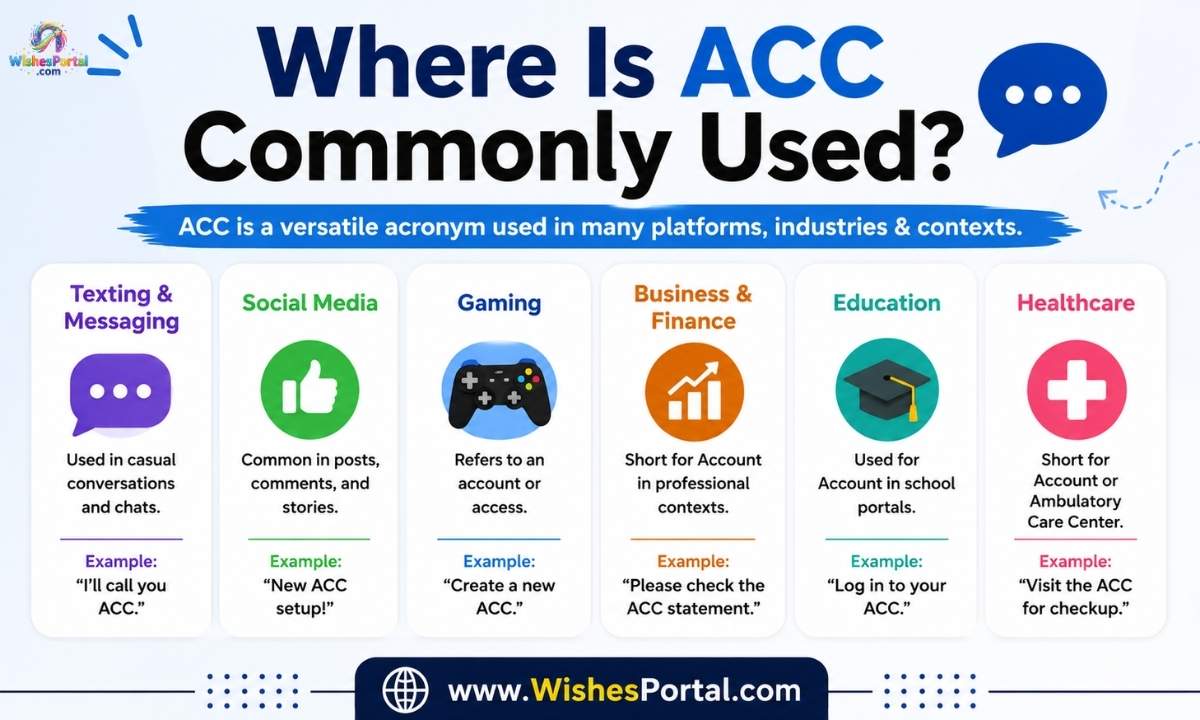
ACC as slang for “actually” didn’t come from one specific platform — it emerged organically across multiple digital spaces and became mainstream through repetition. Understanding where it’s used helps you know when it fits naturally and when it doesn’t belong.
Social Media Platforms
On platforms like Twitter/X, TikTok, and Instagram, ACC shows up constantly in captions, comments, and replies. Users drop it mid-sentence to add a tone of candid honesty — almost like a confession or realization landing mid-post.
“This movie ACC slapped. I wasn’t expecting that.” “I ACC forgot today was Monday. No wonder I’m stressed.”
It works especially well in these spaces because social media rewards brevity. No one wants to type “actually” when “ACC” says the same thing in three keystrokes and feels more natural in that environment.
Text Messaging
In private texting, ACC fits naturally into casual conversations between friends. It carries the same energy as an afterthought or a moment of real talk being dropped into an otherwise light exchange.
“Are you ACC coming tonight or are you bailing again?” “She ACC told him off. Respect.”
The abbreviation feels more personal and direct in texts — like verbal emphasis that translates effortlessly into written shorthand.
Gaming Communities
In gaming, ACC serves double duty. Players use it both as “actually” in chat:
“That ACC worked, I can’t believe it.”
And as a reference to their account in technical discussions:
“My ACC got banned for no reason.” “Buying a ranked ACC is against the ToS.”
Discord servers, gaming subreddits, and in-game chat are all spaces where both uses of ACC run parallel. Context almost always makes it clear which one is meant.
Reddit and Online Forums
Reddit users frequently use ACC in comment threads, especially when pushing back on popular opinions or adding a surprising personal take. The slang meaning of “actually” fits perfectly in the debate-heavy, opinion-rich culture of public forums and discussion boards.
“The sequel was ACC better than the original, and I’ll die on that hill.”
Snapchat and Private Messaging Apps
On Snapchat, BeReal, and WhatsApp, ACC appears in quick exchanges where tone matters but time doesn’t. It softens or intensifies a statement depending on the surrounding words and the conversational energy between the people involved.
Examples of ACC in Conversation
The best way to truly understand any slang term is to see it in action. Here are real-style examples of how ACC gets used across different tones, platforms, and conversational purposes. Notice how the meaning stays consistent even when the situations change dramatically.
Expressing genuine surprise:
“I ACC enjoyed that meeting. Who even am I right now?”
Admitting something unexpectedly:
“She ACC apologized first. I was shocked.”
Emphasizing a strong personal opinion:
“This is ACC the best pizza I’ve ever had.”
Calling someone out with honesty:
“You ACC never texted back. Don’t pretend you forgot.”
Reacting to something that defied expectations:
“He ACC showed up. I told everyone he wouldn’t.”
Using it in gaming (account meaning):
“Lost my ACC because I forgot the email. Tragic.”
Affirming that something really works:
“That tip ACC works. Tried it and it’s legit.”
In a group chat planning scenario:
“We should ACC plan this trip instead of just talking about it.”
On a TikTok comment:
“This ACC made me tear up 😭”
As a soft, friendly correction:
“It’s ACC not that hard once you understand the basics.”
As you can see, ACC adds punch, honesty, and a conversational edge without requiring much effort to type. That combination is exactly why it spread so quickly across digital communication platforms worldwide.
When to Use and When Not to Use ACC?
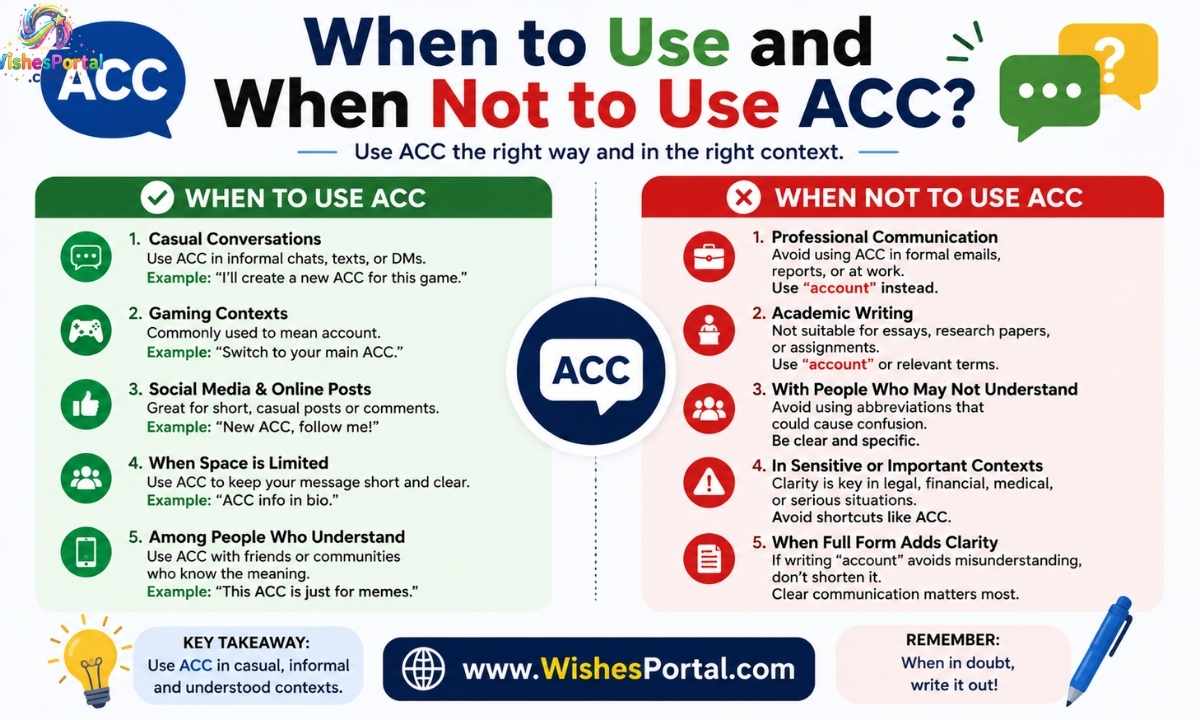
Like all internet slang and digital abbreviations, ACC has its place — and knowing where that place isn’t matters just as much as knowing how to use it correctly. Context is everything with slang terms, and dropping ACC into the wrong setting can come across as unprofessional, confusing, or simply out of place.
When to Use ACC ✅
- In casual texting with friends — This is the natural home of ACC; it fits perfectly in informal, low-stakes conversation where everyone already speaks the same digital language
- On social media posts and comments — Especially on TikTok, Twitter, Instagram, and Snapchat where brevity, authenticity, and personality are the whole point
- In gaming chats and Discord servers — Both meanings (actually and account) work well here, and the audience understands the shorthand without needing clarification
- In memes and online humor — ACC shows up constantly in funny captions and viral content because it adds blunt, real-talk energy that lands immediately
- In DMs and group chats — Any informal private messaging space where the tone is relaxed, the conversation flows fast, and the audience already knows you
When NOT to Use ACC ❌
- In professional emails or work communications — No matter how casual your workplace culture is, abbreviations like ACC in formal correspondence look unclear and sloppy
- In academic writing or essays — Even if you’re writing about internet culture, always spell out “actually” unless you’re directly quoting the slang for linguistic analysis
- When messaging someone older who may not recognize the term — Sending “You ACC made the best pie ever” to grandma is sweet in intent but confusing in delivery — and she deserves to fully understand the compliment
- In job applications or cover letters — Digital slang has absolutely no place in professional documents, no matter how young or modern the company appears
- In formal social media contexts — If you’re posting as a brand, business, or public figure in a serious or official capacity, slang abbreviations chip away at your credibility instantly
Comparison Table (Mobile-Friendly Version)
| Context | Use ACC? | Why |
| Texting friends | ✅ Yes | Casual tone, fits naturally |
| Instagram / TikTok comments | ✅ Yes | Short, expressive, platform-appropriate |
| Gaming chat (Discord, etc.) | ✅ Yes | Both meanings understood by audience |
| Group chats / DMs | ✅ Yes | Informal setting, shared slang vocabulary |
| Work email | ❌ No | Looks unprofessional, may confuse recipients |
| Academic writing | ❌ No | Always spell out “actually” in full |
| Formal brand social media | ❌ No | Undermines authority and credibility |
| Texting older relatives | ❌ No | Likely to cause confusion or misreading |
| Job applications | ❌ No | Never appropriate under any circumstances |
| Reddit / forums (casual) | ✅ Yes | Fits the informal, opinion-heavy culture |
This table is your quick-reference guide for ACC usage. Screenshot it, save it, or send it to someone who just typed it in a work Slack message and doesn’t understand why everyone went quiet.
Similar Slang Words or Alternatives
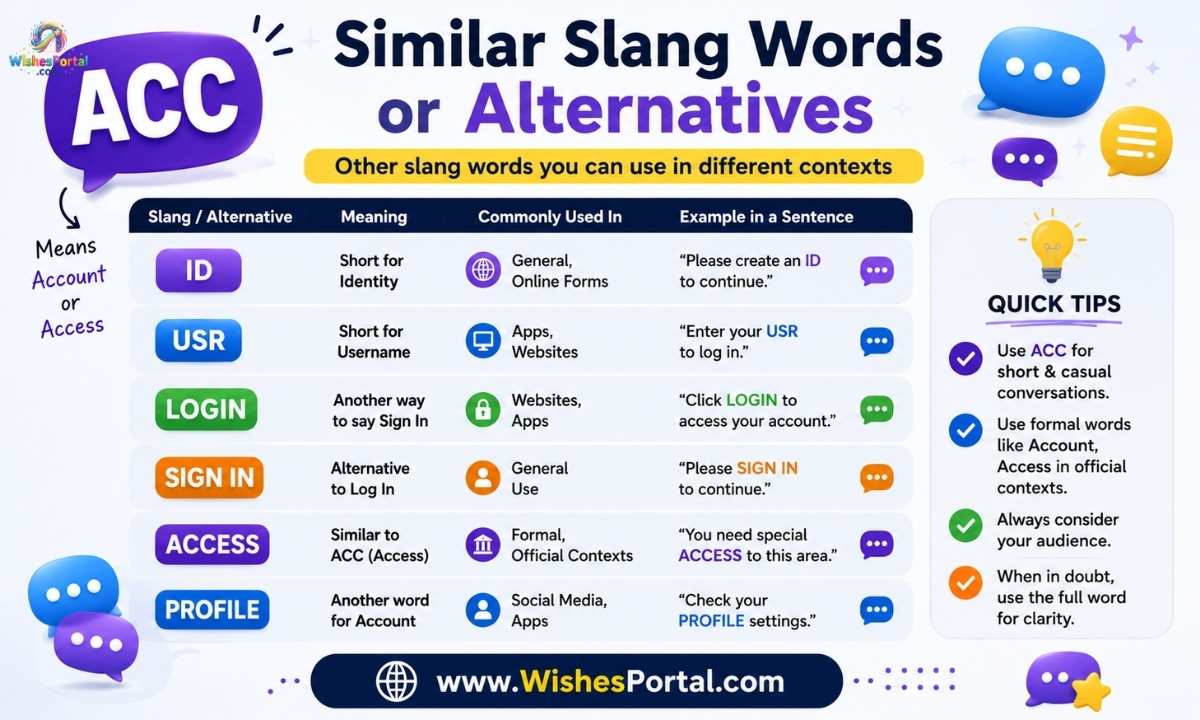
If you’re building your digital slang vocabulary — or simply want to understand the broader language landscape that ACC lives in — it helps to know the related terms and alternatives that carry similar conversational energy. These are the abbreviations and expressions that appear alongside ACC most frequently in the wild.
NGL (Not Gonna Lie) NGL and ACC are frequent companions in digital conversation. Both introduce honest or surprising statements, but there’s a subtle difference: NGL is more of a confession opener, while ACC functions as a mid-sentence emphasis marker.
“NGL, that ACC surprised me.”
TBH (To Be Honest) TBH functions almost identically to ACC in many contexts — both signal candor and real talk. TBH tends to be slightly more self-reflective or emotionally revealing, while ACC simply sharpens the emphasis on the statement that follows it.
“TBH, I ACC didn’t think you’d show up.”
FR / FR FR (For Real) FR is the blunter, more direct cousin of ACC. Where ACC adds emphasis with a sense of mild surprise, FR doubles down with raw sincerity — the conversational equivalent of a hand on the table.
“This is ACC wild, FR.”
ISTG (I Swear To God) ISTG takes the honest emphasis of ACC and amplifies it dramatically. Use it when ACC alone doesn’t quite capture how genuinely you mean something.
“ISTG she ACC said that out loud in front of everyone.”
Lowkey / Highkey These two are feeling-based qualifiers. Lowkey softens an admission; highkey amplifies it with enthusiasm. They’re used similarly to ACC but carry more emotional texture and tone.
“I lowkey ACC enjoyed that.”
Deadass Popular in New York-origin internet slang, deadass means “seriously” or “I’m not joking.” It overlaps with ACC in function but carries more weight and bluntness.
“He deadass ACC walked out mid-conversation.”
No Cap No Cap means “no lie” — similar to ACC in that both signal authenticity. No Cap is broader in application and used more frequently as a sentence-ender than a mid-sentence emphasis marker.
“That was the best concert I’ve ever been to, ACC, no cap.”
| Slang Term | Meaning | How It Relates to ACC |
| NGL | Not Gonna Lie | Both introduce candid, honest statements |
| TBH | To Be Honest | Nearly identical in function and feel |
| FR | For Real | Stronger sincerity emphasis than ACC |
| ISTG | I Swear To God | Amplified version of the same honesty signal |
| Lowkey | Secretly / Mildly | Softened approach to candid admissions |
| Deadass | Seriously / No joke | Overlaps directly with ACC in usage |
| No Cap | No Lie | Frequently paired with ACC for double emphasis |
Understanding these alternatives doesn’t just help you decode messages — it helps you read tone, intent, and personality in digital conversations far more accurately.
FAQs
1. What does ACC mean in texting?
ACC in texting most commonly means “actually” — it’s used to add emphasis, express mild surprise, or introduce a candid statement in casual conversation between friends.
2. Does ACC mean the same thing on TikTok and Instagram as it does in texts?
Yes — on TikTok, Instagram, and most social media platforms, ACC still primarily means “actually,” and the tone and usage are nearly identical to how it appears in personal text messages.
3. Can ACC mean something different in gaming?
In gaming communities, ACC often refers to “account” rather than “actually” — phrases like “my ACC got banned” or “selling my ACC” are about a user’s game account, not an emphasis marker.
4. Is it appropriate to use ACC in professional settings?
No — ACC is casual internet slang and should be reserved for informal conversations; in professional emails, formal writing, or workplace communication, always spell out the full word “actually.”
Conclusion
ACC is one of those small abbreviations that carries surprisingly big conversational weight. Whether it’s landing in a text to add a moment of raw honesty, punching up a TikTok comment with real-talk energy, or quietly referring to a gaming account in a Discord server — it shows up often and it means something every time. The key is knowing your audience. ACC thrives in informal digital spaces and falls flat the moment it crosses into professional or formal territory. Now that you have the full breakdown — the meaning, the examples, the do’s and don’ts, and the slang neighbors it runs with — you’ll never have to second-guess it again. Go forth and text with confidence. 💬




1 thought on “ACC Meaning 💬 Full Guide, Examples & Contexts Explained”