
Ever stared at your phone, completely baffled by a three-letter acronym your friend just dropped into the chat? Texting slang evolves at lightning speed, leaving many of us playing catch-up just to keep our conversations flowing smoothly.
Today, we are diving deep into the mysterious world of NFS to clear up all the confusion once and for all. By the end of this guide, you will know exactly how to decode this popular abbreviation and use it like a seasoned pro.
Quick Answer (Featured Snippet Optimized)
In the realm of modern texting and social media, “NFS” most commonly stands for”Not For Sure” or “No Funny Stuff.” When someone says “Not For Sure,” they are expressing uncertainty or hesitation about a plan. Conversely, when used as “No Funny Stuff,” it means the sender is being completely serious, honest, or legitimate about what they just said.
When people use NFS?
People typically drop this acronym into their daily digital conversations when they want to emphasize their sincerity or express a lack of certainty. For instance, if you are making weekend plans and your friend replies with NFS, they are either telling you they aren’t completely locked in yet, or they are swearing that their previous statement was 100% genuine. It is a quick, efficient way to add emotional weight or clarify your stance without typing out a lengthy paragraph. Furthermore, it acts as a digital shortcut that saves time while still conveying the necessary emotional context.
What Does NFS Mean in Text?
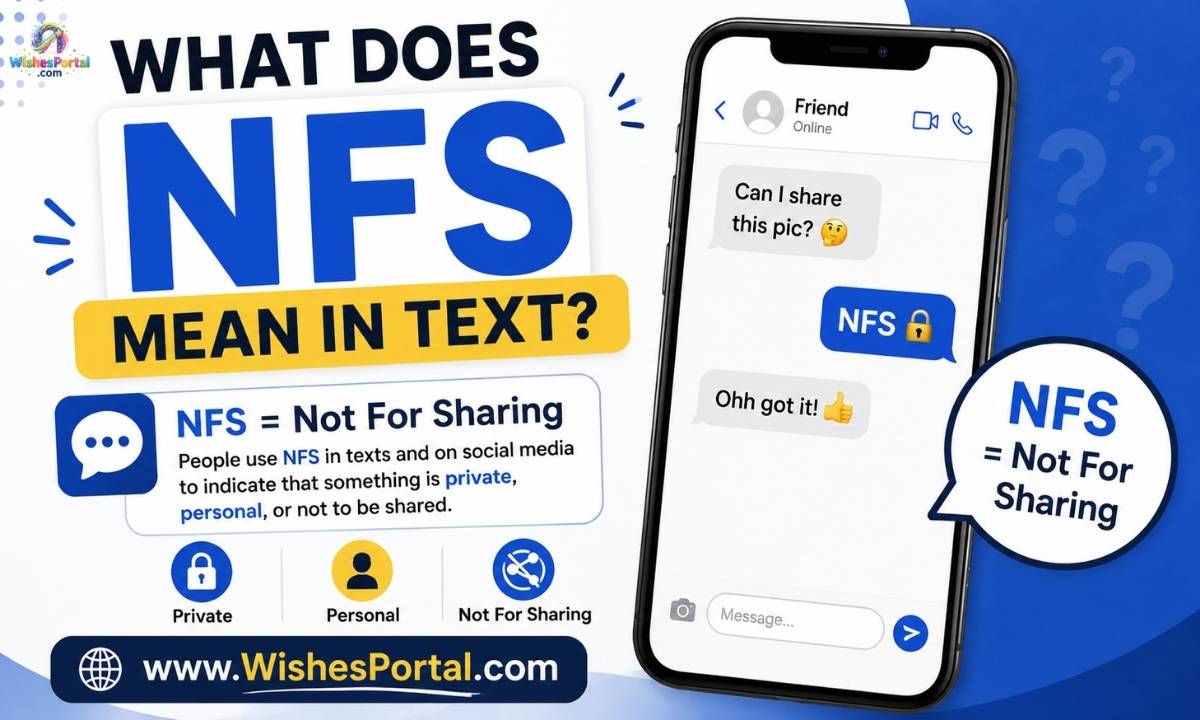
To truly master digital communication, you have to understand that context is absolutely everything. The English language is wonderfully complex, and texting abbreviations are no exception. NFS is a prime example of an acronym that shifts its entire personality depending on the conversation it inhabits. While “Not For Sure” and “No Funny Stuff” dominate the texting landscape, the vibe changes drastically based on who you are talking to and what the preceding messages were about. Understanding these subtle shifts is the key to becoming a fluent digital communicator.
Easy Explanation:
Think of NFS as a digital tone indicator. If your friend asks if you are coming to the party and you reply with NFS, you are basically saying, “I don’t know yet, don’t count on me.” However, if you are telling a wild story and add NFS at the end, you are essentially saying, “I swear on my life this actually happened, no jokes.” It bridges the gap between plain text and spoken body language, giving your words the inflection they desperately need.
Mini Examples:
* Friend: “Are you going to finish that pizza?”
* You: “NFS, I might save it for later.” *(Meaning: Not For Sure)*
* Friend: “Did you really just meet a celebrity at the grocery store?”
* You: “Yes, NFS, it was totally him.” *(Meaning: No Funny Stuff)*
Where Is NFS Commonly Used?
You will spot this versatile little acronym popping up all over your favorite digital hangouts. It has become a staple in direct messaging apps where quick, casual communication is the absolute norm. Because modern apps prioritize speed and brevity, acronyms like NFS thrive in these environments.
* Snapchat: Often used in captions or quick streak replies to clarify intent or validate a snap.
* TikTok & Instagram Comments: Users drop it in comment sections to validate a crazy claim, express doubt, or agree with a controversial take.
* iMessage & WhatsApp: The bread and butter of NFS, used heavily in daily group chats and one-on-one texting among close friends.
* Discord: Gamers and community members use it to confirm if a piece of news is legit, a rumor, or just a joke.
Tone and Meaning Explained
The beauty of slang lies in its emotional flexibility. The exact same three letters can convey warmth, indifference, or even subtle hostility depending on how they are deployed. Understanding these tonal shifts is crucial for maintaining healthy digital relationships and avoiding unnecessary misunderstandings. Let us break down how the tone completely alters the NFS experience.
Friendly Tone
When used in a friendly context, NFS acts as a conversational softener. If a friend invites you to an event and you aren’t ready to commit, saying “NFS, but I really want to!” keeps the door open without making false promises. It shows that you value the invitation but are just being honest about your current uncertainty. It feels casual, approachable, and completely devoid of pressure, making it a great tool for polite boundary-setting.
Neutral Tone
In a strictly neutral setting, NFS is just a factual placeholder. If a coworker or acquaintance asks about your availability for a future project, replying with “NFS” simply means your schedule is currently up in the air. There is no hidden emotional subtext here; it is just a highly efficient way to say “my schedule is currently unconfirmed.” It gets the job done without adding unnecessary fluff to the conversation, keeping things strictly professional yet casual.
Rude / Cold Tone
Believe it or not, three letters can definitely freeze a conversation. If someone asks you a direct, important question and you reply with a blunt “NFS,” it can come across as dismissive or aloof. It shuts down the conversation abruptly, signaling that you do not care enough to provide a proper explanation. Without emojis or follow-up text, a standalone NFS can feel like a digital door slamming in someone’s face, so use this tone with extreme caution.
Examples of NFS in Conversation
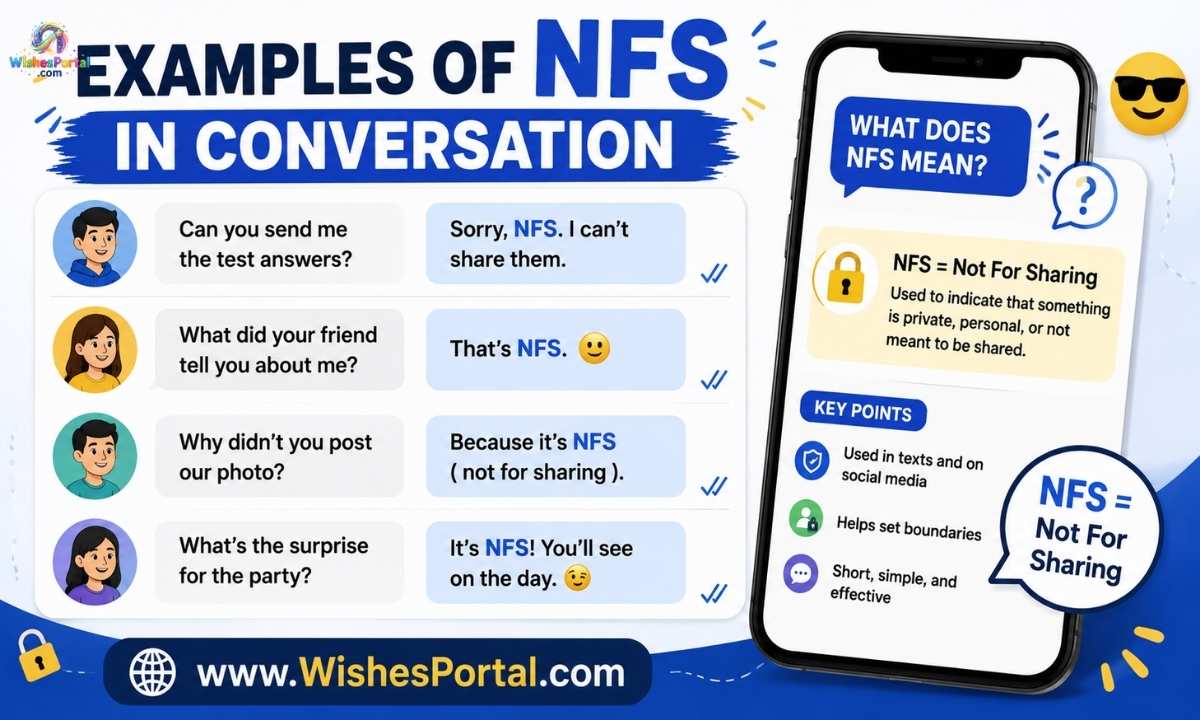
Seeing slang in action is always the best way to grasp its true utility. Let us look at a few realistic text exchanges to see how NFS naturally weaves into our daily digital lives and how context dictates its meaning.
Scenario 1: “Making Weekend Plans”
Alex: “Hey! We are heading to the beach this Saturday, you in?”
Jordan: “NFS, I have to check if my parents need help with the house first.”
Alex: “No worries, just let me know by Friday!”
(Here, NFS perfectly communicates uncertainty without ruining the friendly vibe.)
Scenario 2: “Sharing Crazy News”
Sam: “I just found out that Mr. Henderson is retiring next month!”
Casey: “Wait, really? NFS?”
Sam: “NFS, I saw the email from the principal myself.”
(In this case, the meaning shifts to “No Funny Stuff” to emphasize absolute truth and shock.)
Scenario 3: “Settling a Debate”
Taylor: “There is no way that movie made a billion dollars at the box office.”
Morgan: “It actually did, NFS. Look it up.”
(Morgan uses it to firmly shut down the debate with verified facts.)
NFS Meaning From a Girl
Decoding texts from a crush or a close female friend can sometimes feel like solving a complex puzzle. When a girl uses NFS, she is usually looking to establish trust or manage expectations gracefully. Women often use slang to soften their communication, ensuring they do not come across as overly blunt while still getting their point across clearly and effectively.
Possible meanings:
If a girl texts you NFS, she is likely either trying to be completely transparent about her feelings (No Funny Stuff) or gently letting you know she needs more time to make a decision (Not For Sure). It is a way to maintain authenticity in the conversation without applying unnecessary pressure to either party, keeping the dynamic light and respectful.
Example:
You: “Do you think we should study at the library or a coffee shop?”
Her: “NFS, the library is quieter but the coffee shop has better snacks.”
(She is genuinely weighing the options and sharing her thought process openly, inviting you into her decision-making process.)
NFS Meaning From a Guy
Guys tend to use texting abbreviations to keep things brief, efficient, and straightforward. When a guy drops NFS into the chat, he is usually prioritizing the core message over emotional nuance. However, this does not mean he is being cold; he is simply utilizing the digital shorthand that feels most natural to his communication style and the specific platform he is using.
Common meanings:
For guys, NFS is frequently used to validate a statement or confirm a fact without dragging out the conversation. If he is telling you about a game, a car, or a wild experience, adding NFS is his way of saying, “I am not exaggerating, this is the raw truth.” It is a stamp of authenticity in a digital world full of exaggerations and humble bragging.
Example:
Friend: “Did you really fix that car engine by yourself?”
Him: “Yeah NFS, took me all weekend but it runs perfectly now.”
(He is proudly confirming his achievement and ensuring you know he is not bragging without cause, using the acronym as a seal of honesty.)
Is NFS Ever Rude or Offensive?
While NFS is generally harmless, no slang is entirely immune to being misinterpreted. The perceived rudeness of this acronym almost always boils down to delivery, timing, and the existing dynamic between the two people texting. Let us explore how the tone can accidentally cross the line into offensive territory and how to avoid it.
Dry tone:
A dry tone occurs when NFS is used as a one-word reply to a thoughtful message. If someone sends you a long, heartfelt paragraph and you respond with just “NFS,” it feels incredibly dismissive. It signals that you could not be bothered to type out a full sentence, which can easily hurt the sender’s feelings and make them feel ignored.
Passive-aggressive tone:
Sometimes, NFS is used to subtly express annoyance or skepticism. If a friend keeps changing their story and you reply with “NFS,” you are essentially calling them out for being inconsistent. It acts as a polite but firm way of saying, “Make up your mind,” or “I don’t believe you,” without starting an outright argument or using aggressive language.
Polite tone:
On the flip side, when padded with polite language, NFS is perfectly respectful and highly effective. Saying, “I am NFS right now, but I will get back to you tomorrow!” is a highly courteous way to manage someone’s expectations. The surrounding words do all the heavy lifting to ensure the acronym is received warmly and professionally, avoiding any accidental coldness.
When to Use and When NOT to Use?
Knowing when to deploy your slang is just as important as knowing what it means. Using the right acronym at the right time can make you look culturally aware and socially adept. Conversely, using it in the wrong setting can make you look unprofessional or completely out of touch. Here is a handy guide to help you navigate these digital waters.
| Scenario | Should You Use NFS? | Why? |
|---|---|---|
| Casual Group Chat | ✅ Yes | Perfect for quick updates, casual banter, and keeping the conversation flowing with friends. |
| Professional Email | ❌ No | Always use full, formal words in a corporate, academic, or professional setting to maintain respect. |
| Texting a Crush | ✅ Yes | Great for keeping things light, showing authenticity, and avoiding coming on too strong. |
| Talking to Grandparents | ❌ No | Older generations might just think you are talking about racecars or computer networks, causing confusion. |
| Confirming a Rumor | ✅ Yes | Excellent for emphasizing that a piece of gossip or news is 100% true and verified by you. |
| Customer Service Chat | ❌ No | Maintain professional clarity; avoid confusing the support agent with internet slang. |
NFS Meaning in Chat vs Social Media
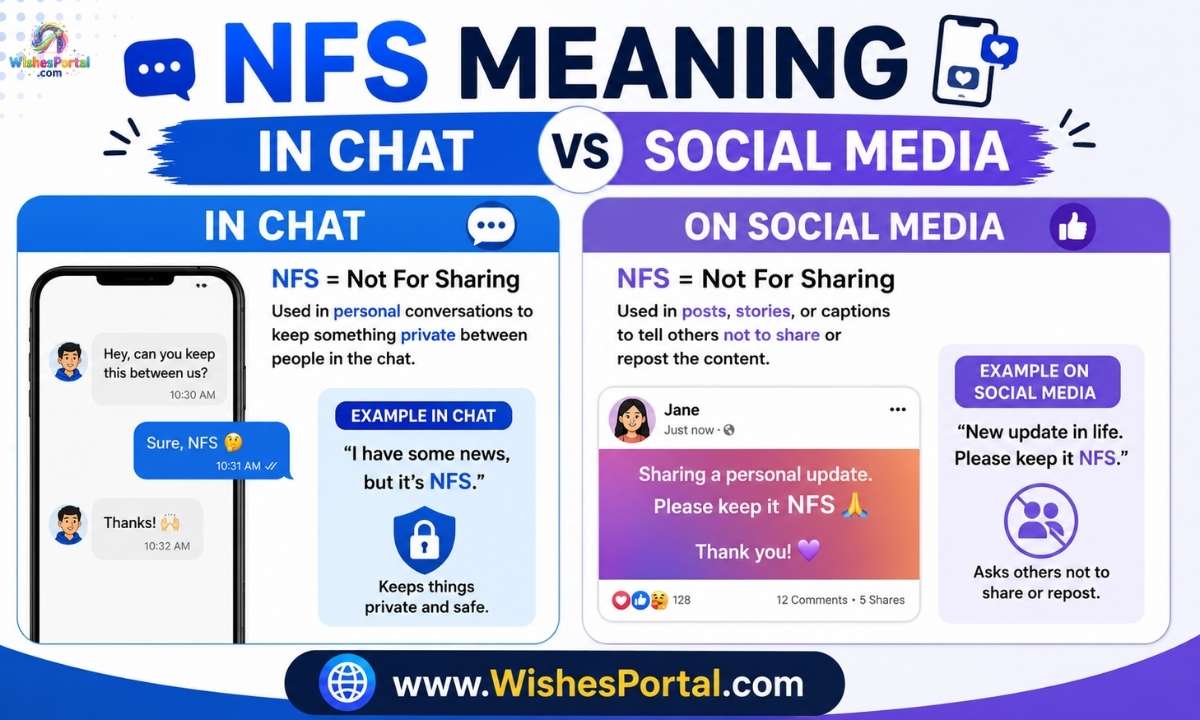
The platform you are using heavily influences how your message is interpreted by your audience. A private chat allows for more nuanced, rapid-fire slang, while public social media feeds require a slightly different approach to ensure your message lands correctly. Let us examine how NFS adapts to these different digital environments.
In Chat:
In direct messaging apps like iMessage, WhatsApp, or Snapchat, NFS is used in real-time, rapid exchanges. It acts as a conversational lubricant, keeping the dialogue flowing quickly without getting bogged down by formal grammar or lengthy explanations. Here, it is highly conversational, deeply tied to the immediate context of the chat, and understood implicitly by both parties.
On Social Media:
On platforms like Instagram, TikTok, or X (formerly Twitter), NFS often takes on a more performative or public role. Users might put “NFS” in a caption or a comment to grab attention and validate a bold claim to a wider audience. In this public square, it acts as a digital badge of honor, proving that the poster is sharing unfiltered, genuine content and inviting the community to trust their word.
Similar Slang Words or Alternatives
If you want to mix up your digital vocabulary and avoid sounding like a broken record, there are plenty of other slang terms that share the same DNA as NFS. Expanding your texting lexicon ensures your conversations remain fresh, engaging, and perfectly tailored to the moment. Here are some excellent alternatives to keep in your back pocket.
* NGL (Not Gonna Lie): Used when you are about to share a harsh truth, a vulnerable feeling, or a genuine opinion that might be controversial.
* TBH (To Be Honest): A classic, widely understood alternative for emphasizing sincerity in your statements without sounding too aggressive.
* FR (For Real): The ultimate stamp of agreement or truth, very similar to “No Funny Stuff,” used to strongly validate a point.
* IDK (I Don’t Know): The direct, universally understood equivalent when using NFS to mean “Not For Sure” about a plan or fact.
* ISTG (I Swear To God): Used to aggressively validate that you are telling the absolute truth, often when someone doubts your story.
Other Meanings of NFS
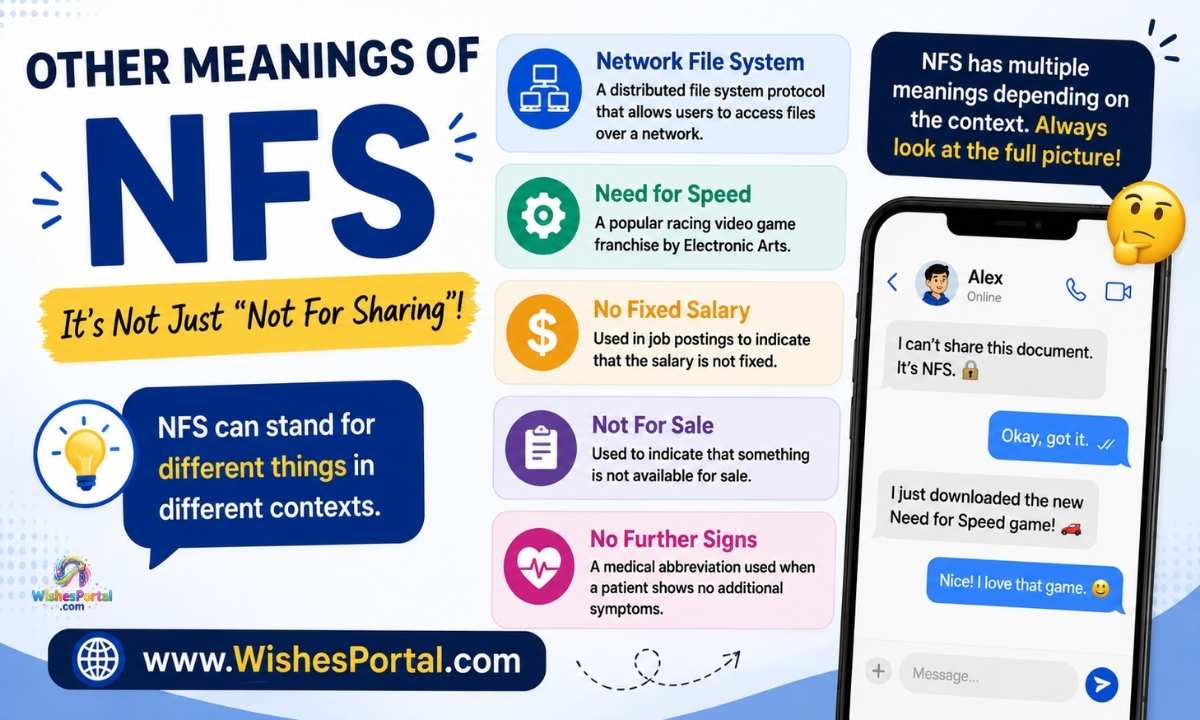
While we have thoroughly explored the texting universe, it is crucial to remember that acronyms live double lives. If you step outside the realm of casual messaging, NFS transforms into something entirely different. To ensure you never get caught off guard, here is a comprehensive breakdown of what else this acronym can mean across various industries and hobbies.
* Need For Speed: The legendary, adrenaline-pumping arcade racing video game franchise developed by Electronic Arts.
* Network File System: A distributed file system protocol that allows a user on a client computer to access files over a computer network.
* Not For Sale: A term frequently used in online marketplaces, art communities, and retail to indicate an item is not available for purchase.
* No Funny Stuff: A playful or serious way to tell someone to behave properly or to confirm that a situation is completely legitimate.
* Not Feeling Social: A modern mental health and introvert-friendly acronym used to politely decline invitations when your social battery is completely drained.
* National Field Standard: A technical term used in various engineering and scientific disciplines to denote baseline measurements and protocols.
Need For Speed
For the gamers out there, this is the undisputed king of NFS meanings. Since 1994, Need For Speed has been defining street racing culture, tuning aesthetics, and arcade physics. If your friend suddenly starts talking about NFS and mentions “police chases,” “nitrous boosts,” or “drifting,” they are definitely not talking about their text messaging habits. They are talking about dominating the virtual streets.
Network File System
If you find yourself in an IT department, a server room, or a computer science lecture, NFS takes on a highly technical identity. Created by Sun Microsystems in the 1980s, this protocol is the backbone of how different computers share files seamlessly across a network. It is the unsung hero of corporate data management, allowing multiple users to access the same documents simultaneously without a hitch.
No Funny Stuff
This circles back to our texting definition, but it is worth highlighting as a standalone cultural concept. “No Funny Stuff” is often used in gaming communities, online trading, or casual real-life meetups to establish strict ground rules. It is a quick, universally understood way of saying, “Let us keep this legitimate, follow the rules, and avoid any trolling, scams, or bad behavior.”
Why Do People Use NFS?
The evolution of texting slang is not just a random occurrence; it is driven by deep psychological, social, and practical needs. We are constantly looking for ways to communicate more efficiently while still conveying complex emotions and intentions. Understanding why we gravitate toward acronyms like NFS gives us a fascinating glimpse into modern digital sociology and human behavior.
Fast typing
Let us be honest, our thumbs can only move so fast on a glass screen. When you are walking down the street, commuting, or multitasking, typing out “I am not completely certain about my plans right now” is a massive hassle. NFS allows us to convey that exact sentiment in a fraction of a second, saving us precious time, physical effort, and battery life.
Internet culture
Slang is the secret handshake of internet culture. Using the right abbreviations signals to others that you are plugged in, culturally aware, and part of the “in-group.” It creates a powerful sense of belonging and shared identity among peers who understand the digital shorthand, reinforcing social bonds in a virtual space.
Convenience
Beyond just speed, NFS is incredibly convenient because it packs a lot of contextual meaning into a tiny, easily digestible package. It acts as a conversational shortcut that both the sender and receiver instantly understand, streamlining the entire communication process and significantly reducing the cognitive load required to text.
Trend factor
There is also an undeniable thrill in adopting the latest linguistic trends. As influencers, celebrities, and popular creators start using NFS in their captions and streams, their millions of followers naturally adopt it to emulate their idols. It is a self-perpetuating cycle of digital trendsetting that keeps the language constantly evolving and exciting.
FAQs:
1. What is the most common NFS meaning in texting?
In modern texting, NFS primarily stands for “Not For Sure” (expressing uncertainty) or “No Funny Stuff” (emphasizing that you are being completely serious and honest).
2. Can NFS mean “Need For Speed” in a text?
Yes, if the conversation is about video games, racing, or gaming culture, NFS almost certainly refers to the popular Electronic Arts racing franchise, Need For Speed.
3. Is it rude to reply with just NFS?
It can be perceived as rude or dismissive if you use a standalone “NFS” to reply to a long, thoughtful message, as it feels abrupt and lacks conversational effort.
4. How do I know if they mean “Not For Sure” or “No Funny Stuff”?
You must rely on the context of the conversation; if they are answering a question about plans, it means “Not For Sure,” but if they are confirming a crazy story, it means “No Funny Stuff.”
Conclusion
Mastering the ever-changing landscape of texting slang is the key to staying connected and avoiding awkward misunderstandings in our fast-paced digital world. Now that you know exactly what NFS means, you can text with absolute confidence, decode your friends’ messages effortlessly, and keep your conversations flowing smoothly.




2 thoughts on “NFS Meaning in Text Full Slang Explained 2026”