
Ever gotten a text that just says “LY” and wondered if you missed something important? You’re not alone. This tiny two-letter combo shows up everywhere — from late-night texts to Instagram comments — and it carries more weight than its size suggests.
By the end of this guide, you’ll know exactly what LY means, when to use it, when to skip it, and how it differs from similar slang terms floating around your group chats.
Confused by the meaning of NB in texts or online chats? Learn what NB really stands for, how it’s used in texting, emails, social media, and see real-life examples to use it correctly.
👉 Read more: https://wishesportal.com/nb-meaning/
LY Meaning? 🧠
LY stands for “Love You.” It’s a shorthand expression used in texting, social media, and casual digital conversations to express affection quickly and informally.
Unlike a full “I love you,” LY tends to feel lighter and more casual. People often use it with friends, family members, or romantic partners as a quick sign-off rather than a deep declaration. Think of it as the emotional equivalent of a quick hug — warm, but not overwhelming.
That said, context always matters. The meaning of LY can shift slightly depending on who’s sending it and the relationship between the two people texting. A sibling texting LY after a phone call means something different than a partner texting it before bed.
Why Texting Slang Like LY Became So Popular 📲
Before diving deeper, it helps to understand why abbreviations like LY exist in the first place. Texting culture has always prized speed over formality, and that habit only intensified with the rise of smartphones.
A few reasons LY and similar shorthand terms caught on:
- Character limits – older SMS plans capped messages, pushing people toward shorter phrases
- Typing speed – thumbs move faster typing two letters than four words
- Emotional efficiency – LY conveys warmth without requiring a lengthy reply
- Generational habit – younger users grew up normalizing abbreviations as a primary communication style
- Social media influence – platforms like Twitter trained users to compress thoughts into fewer characters
In short, LY isn’t laziness — it’s digital efficiency wrapped in affection.
Wondering what “MHM” means when a girl texts it? Discover whether it’s a sign of agreement, flirting, boredom, or something else with real chat examples and easy explanations.
👉 Read more: https://wishesportal.com/mhm-meaning-from-a-girl/
Where Is LY Commonly Used? 📱
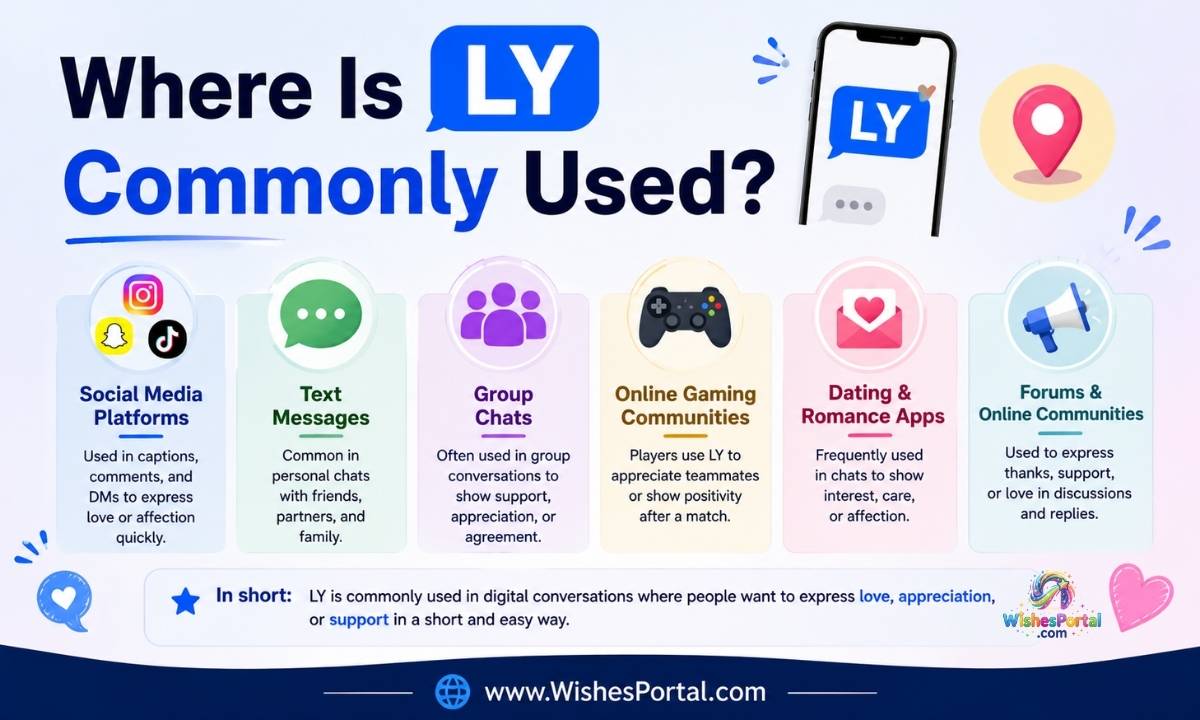
LY pops up across nearly every digital communication platform out there. Because brevity is the whole point of texting slang, this abbreviation has spread far beyond just SMS messages.
Here’s where you’ll typically spot it:
- Text messages (SMS) – the most common home for LY
- Instagram and Facebook comments – often paired with emojis like ❤️ or 😘
- Snapchat captions – quick affectionate sign-offs
- TikTok comments – especially under wholesome or sentimental videos
- WhatsApp and iMessage chats – between close friends or partners
- Twitter/X replies – casual affirmations in reply threads
- Discord servers – among close-knit friend groups or gaming communities
Essentially, anywhere people communicate quickly and informally, LY tends to follow naturally. It has become so normalized that most smartphone keyboards now auto-suggest it after typing just one letter.
Wondering what ACC means in texting or on social media? Discover its different meanings, when to use it, and see practical examples to understand the abbreviation correctly.
👉 Read more: https://wishesportal.com/acc-meaning/
How LY Differs Across Generations 👥
Interestingly, the way people use LY isn’t universal — it shifts depending on age group and digital habits. Understanding these generational nuances can help you avoid sending the wrong vibe.
| Generation | Common Usage Style | Typical Platforms |
| Gen Z | Casual, frequent, often joking | TikTok, Snapchat, Discord |
| Millennials | Sentimental, used with close circles | Instagram, texting |
| Gen X | Reserved for family or partners | SMS, Facebook |
| Boomers | Rare, often written as full phrase instead | Texting, email |
Younger users tend to use LY almost playfully, sometimes even ironically, while older generations treat it as a sincere, meaningful phrase reserved for closer relationships. Recognizing this gap matters, especially in mixed-age family group chats where tone can easily be misread.
Examples of LY in Conversation 💬
Seeing LY in action helps clarify how naturally it fits into everyday digital speech. Below are a few realistic conversation snippets.
Example 1:
Mom: Drive safe tonight, okay? You: Will do, LY 💕
Example 2:
Friend: Thanks for helping me move today, seriously. You: Anytime! LY ❤️
Example 3:
Partner: Goodnight babe You: Goodnight, LY so much 😴
Example 4:
Sibling: Happy birthday, hope your day was great! You: Thank you, LY 🥹
Notice how LY fits smoothly at the end of a message, almost like a verbal nod or a warm wave goodbye. It rarely opens a conversation — instead, it usually closes one on a sweet, affectionate note. This pattern matters because leading with LY can occasionally feel abrupt, whereas closing with it feels natural and warm.
When to Use and When Not to Use LY 🕓
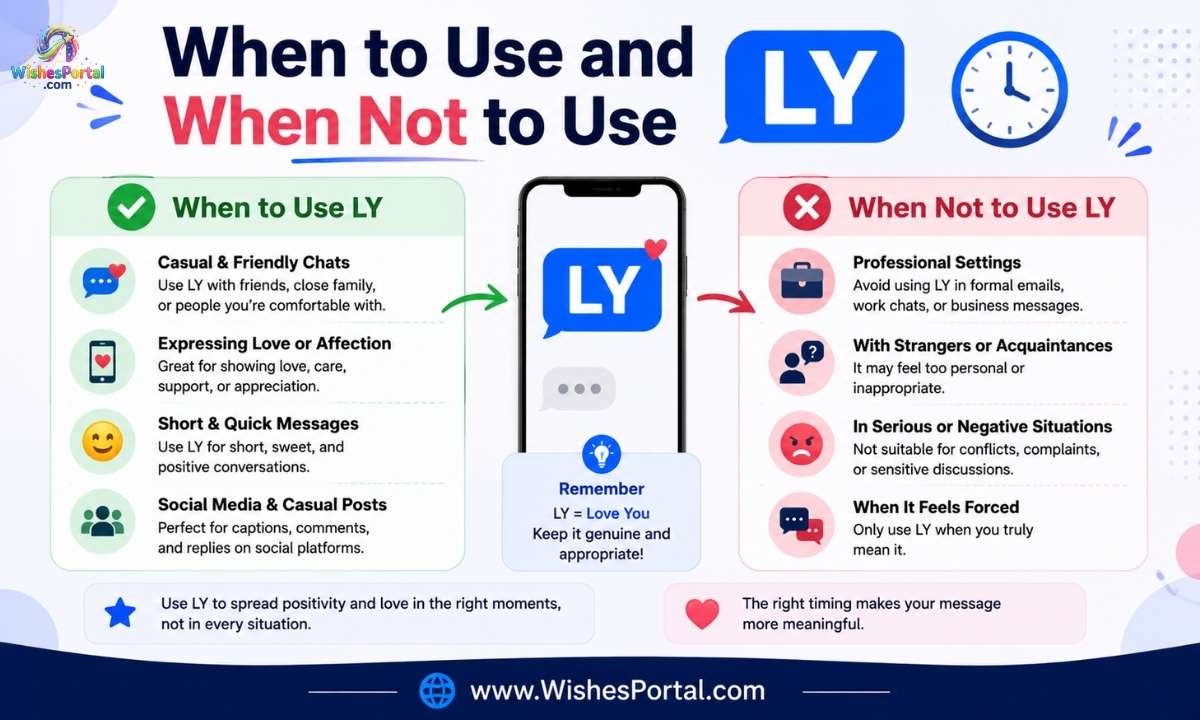
Knowing the right moment to drop an LY can save you from sending mixed signals. While it’s generally a safe, friendly term, context still shapes how it lands.
✅ When to Use LY
- With close friends after a meaningful conversation
- With family members as a quick, caring sign-off
- With a romantic partner during everyday texting
- When ending a call or chat on a warm note
- In comments under heartfelt or nostalgic posts
❌ When Not to Use LY
- In professional or workplace communication
- With someone you’ve just met or barely know
- In formal emails or business messages
- When the relationship hasn’t reached a comfortable, affectionate stage
- If the other person hasn’t reciprocated similar warmth before
Comparison Table
| Term | Full Meaning | Tone | Common Use Case |
| LY | Love You | Casual, light | Texting friends/family |
| ILY | I Love You | Slightly stronger | Romantic or close bonds |
| ILYSM | I Love You So Much | Intense, heartfelt | Deep emotional moments |
| LU | Love You | Same as LY, less common | Texting shorthand |
| XOXO | Hugs and Kisses | Affectionate, playful | Sign-offs, social posts |
This table makes it easy to see how LY compares to its close cousins in tone and intensity.
Common Mistakes People Make When Using LY ⚠️
Even though LY seems harmless, plenty of people unintentionally misuse it in ways that cause confusion or awkwardness. Avoiding these slip-ups keeps your texting game smooth.
- Using it too early – sending LY before a relationship feels established can come across as intense or confusing
- Sending it to the wrong group chat – a classic texting blunder that can spark instant embarrassment
- Overusing it – repeating LY in every single message can dilute its sincerity over time
- Mixing it up with “LY” the medical abbreviation – accidentally confusing contexts, especially in health-related chats
- Assuming everyone knows it – older relatives or coworkers unfamiliar with texting slang may misread the abbreviation entirely
Being mindful of these common pitfalls ensures your message lands exactly the way you intend.
Similar Slang Words or Alternatives 🔄
If LY feels too casual — or you want to switch things up — there are plenty of similar abbreviations carrying comparable meaning. Each one adds a slightly different emotional flavor.
- ILY – “I Love You,” a step up in directness
- ILYSM – “I Love You So Much,” used for stronger emotional emphasis
- LU – another shorthand for “Love You,” seen mostly in older texting circles
- XOXO – represents hugs and kisses, often used in sign-offs
- 3 – a numeric symbol resembling a sideways heart, popular on Twitter and Discord
- LYL – “Love You Lots,” a slightly more playful variation
- LYF – “Love You Forever,” typically reserved for romantic partners
These alternatives let you adjust the intensity of your message depending on the moment and the relationship. Choosing the right one is a bit like choosing the right emoji — small differences carry real emotional weight.
LY as a Suffix: What Does -ly Mean? 📘
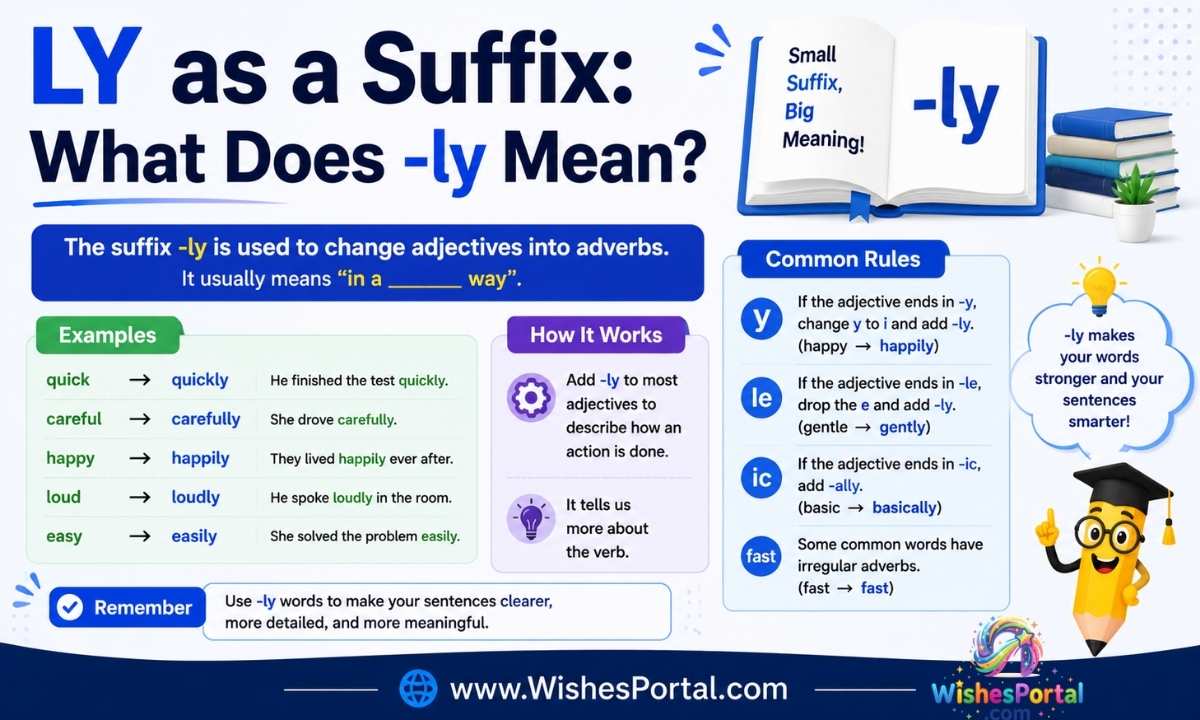
Here’s where things get linguistically interesting. Beyond slang, “-ly” also functions as a grammatical suffix in the English language, and it’s worth understanding both meanings to avoid confusion.
Meaning of the Suffix -ly
In grammar, -ly is typically added to adjectives to form adverbs, describing how an action is performed.
For example:
- Quick → Quickly
- Slow → Slowly
- Honest → Honestly
- Careful → Carefully
- Bright → Brightly
So while LY in texting expresses affection, -ly in grammar transforms descriptive words into action modifiers. Same letters, completely different job — a fun reminder of how flexible language really is. Native English learners often encounter this suffix early on, since it’s one of the most common ways to build adverbs in the language.
Other Meanings People Ask About ❓
Because “LY” appears in different contexts beyond texting, plenty of people search for meanings unrelated to slang. Let’s clear up two common ones.
What does LY mean in a blood test?
In medical and lab contexts, LY typically refers to lymphocytes, a type of white blood cell that plays a key role in immune system function. A complete blood count (CBC) report often lists “LY%” or “LY#” to indicate lymphocyte percentage or count. Doctors use these numbers to assess immune health, detect infections, or monitor certain conditions.
What does bit ly mean?
Bit.ly is a popular URL-shortening service used to convert long web links into short, shareable ones. It’s widely used in marketing, social media, and email campaigns to track clicks and simplify links. Despite sharing the letters “ly,” Bit.ly has no connection to the texting abbreviation — it’s purely a branding choice for the company name.
LY in Pop Culture and Social Media Trends 🎵
LY has also found its way into pop culture, appearing in song lyrics, TikTok trends, and viral captions. Influencers often use it as a quick, relatable sign-off in captions or comment replies, reinforcing its casual, friendly tone.
Some notable patterns include:
- Hashtags like #LY trending under sentimental video edits
- Song titles or lyrics using LY as a stylistic shorthand
- Comment sections filled with LY replies under emotional or nostalgic content
- Couples using LY in matching social media bios or captions
This widespread cultural presence reinforces just how mainstream the abbreviation has become, especially among younger, digitally fluent audiences
Cultural and Regional Differences in Using LY 🌍
While LY has become a near-universal texting term in English-speaking countries, its usage isn’t identical everywhere. Cultural norms around expressing affection digitally can shape how often — and how comfortably — people use it.
A few regional patterns worth noting:
- United States – LY is used freely across friendships, family, and romantic relationships, often without much hesitation
- United Kingdom – slightly more reserved usage, often limited to close friends or partners rather than casual acquaintances
- Australia – similar to the US, with a relaxed, friendly tone attached to LY
- Non-native English speakers – may use LY more literally, sometimes unaware of its casual texting connotation versus formal “I love you”
These cultural nuances matter, especially in international friendships or long-distance relationships where texting is the primary mode of communication. What feels perfectly normal in one country might come across as overly affectionate — or oddly formal — in another.
How to Respond When Someone Sends You LY 💌
Receiving an LY text can sometimes leave people unsure how to reply, especially if the relationship is still developing. Thankfully, there’s no single “correct” response — it largely depends on your comfort level and the nature of the relationship.
Here are a few natural ways people typically respond:
- Mirror it back – simply replying “LY too” keeps things warm and balanced
- Add a personal touch – something like “LY more 💕” adds a playful twist
- Use a different but related term – replying with “XOXO” or “3” keeps the tone light without directly repeating the same phrase
- Acknowledge without reciprocating identically – a simple “aw, you’re the best” works if you’re not ready to mirror the exact phrase
- Stay silent and let it sit – sometimes a heart emoji reaction is response enough, especially on platforms like iMessage or WhatsApp
Ultimately, how you respond should feel authentic rather than forced. Texting slang like LY thrives on genuine, low-pressure communication — so there’s no need to overthink your reply.
FAQs❓
1. What does LY mean in a text message?
LY means “Love You.” It’s a quick, casual way to express affection, often used to end a conversation warmly.
2. Is LY the same as ILY?
Not exactly — LY is more casual, while ILY (“I Love You”) feels slightly more direct and personal.
3. Can LY be used with friends, not just romantic partners?
Yes, LY is commonly used between friends and family members, not just couples.
4. Does LY have any meaning outside of texting slang?
Yes, LY can also refer to lymphocytes in medical blood test results, depending on context.
Conclusion
At its core, LY is a small abbreviation carrying a big, warm feeling — a quick, friendly way to say “Love You” without overcomplicating the moment. Whether you’re texting a friend, signing off with family, or sending a sweet note to a partner, knowing how and when to use LY helps you communicate affection naturally in today’s fast-paced digital world. And the next time someone sends you a simple “LY,” you’ll know exactly how much those two little letters really mean.




1 thought on “LY Meaning 💬 What It Really Means in Texting & Slang”